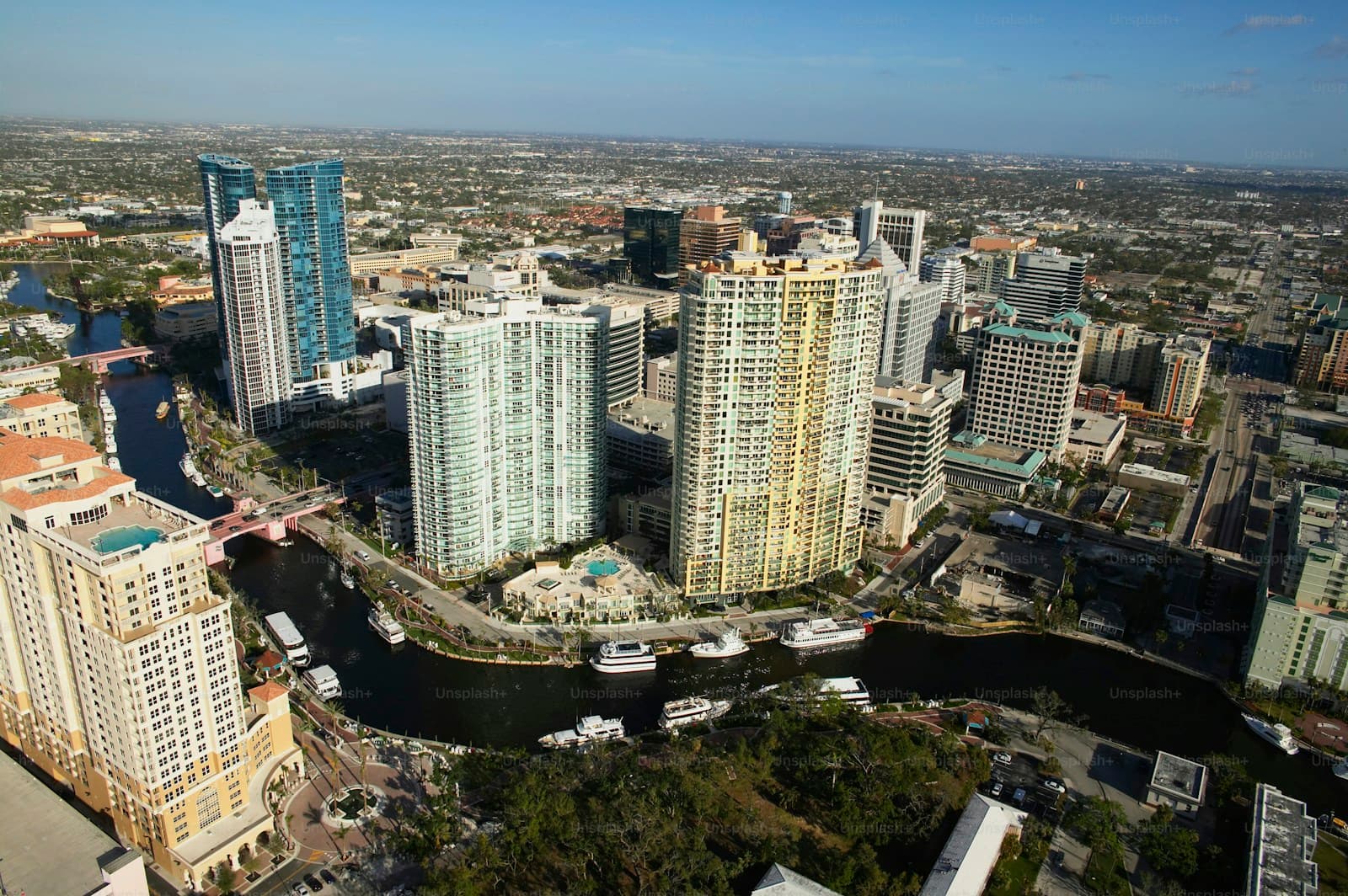
What Affects Rates in Fort Lauderdale
- I-95 and I-595 Corridor Density: Fort Lauderdale sits at the intersection of I-95 and I-595, two of South Florida's highest-volume interstates with frequent congestion and elevated accident rates. High-risk drivers face steeper collision and liability premiums here than in less-traveled Florida cities due to insurer exposure in this corridor.
- Broward County Uninsured Driver Concentration: Broward County typically reports uninsured motorist rates above 20%, among Florida's highest. SR-22 and high-risk drivers pay more for uninsured motorist coverage in Fort Lauderdale because insurers price for the likelihood of being hit by an uninsured driver, and that likelihood is elevated here.
- Hurricane and Flood Exposure: Fort Lauderdale's coastal location and history of hurricane strikes (including direct hits from Category 4–5 storms) increase comprehensive coverage costs for high-risk drivers. Insurers layer storm risk onto your violation history, particularly if you carry full coverage on a financed vehicle.
- Tourist and Seasonal Population Swells: Fort Lauderdale's tourist season (November–April) and spring break influx temporarily triple traffic density and accident frequency on A1A, Las Olas Boulevard, and downtown corridors. High-risk drivers in ZIP codes near tourism zones — 33304, 33316, 33312 — may see marginally higher premiums due to seasonal collision exposure.
- Broward County DUI Court Processing: Broward County operates a dedicated DUI court program, and conviction timelines can extend 6–12 months depending on case backlog. Your SR-22 clock doesn't start until your license is reinstated, so delays in court processing delay your rate recovery timeline — plan for insurance costs to remain elevated until your filing period officially begins.

Find out exactly how long SR-22 is required in your state
Coverage Recommendations
Cost estimates are based on available industry data and vary by driver profile. These are not insurance quotes.
Liability Insurance (Bodily Injury)
Florida requires SR-22 drivers to carry bodily injury liability — typically $10,000/$20,000 minimum, though most agents recommend $100,000/$300,000 in Fort Lauderdale given high uninsured driver rates and litigation trends in Broward County. After DUI or major violation, expect liability-only policies to start around $120–$200/mo for minimum limits.
$120–$200/mo minimum limits after violationEstimated range only. Not a quote.
Full Coverage
Full coverage (liability + collision + comprehensive) for high-risk drivers in Fort Lauderdale typically runs $180–$340/mo, depending on violation type, vehicle value, and ZIP code. Coastal flood exposure and I-95 collision frequency make comprehensive and collision components costlier here than in inland Florida cities.
$180–$340/mo for high-risk driversEstimated range only. Not a quote.
Uninsured Motorist Coverage
With Broward County's uninsured driver rate above 20%, uninsured motorist (UM) coverage is critical for Fort Lauderdale drivers — particularly those with recent violations who can't afford out-of-pocket costs from a hit-and-run or uninsured driver collision. UM coverage typically adds $15–$40/mo to high-risk policies but protects against a statistically likely scenario in this metro.
$15–$40/mo additional for UM coverageEstimated range only. Not a quote.
Comprehensive Coverage
Comprehensive coverage in Fort Lauderdale prices in hurricane risk, flood exposure, and elevated theft rates in certain ZIP codes (33311, 33313 historically show higher auto theft). High-risk drivers with financed vehicles typically pay $60–$120/mo for comprehensive alone, reflecting both your violation history and the city's weather and crime profile.
$60–$120/mo for high-risk drivers with coastal exposureEstimated range only. Not a quote.