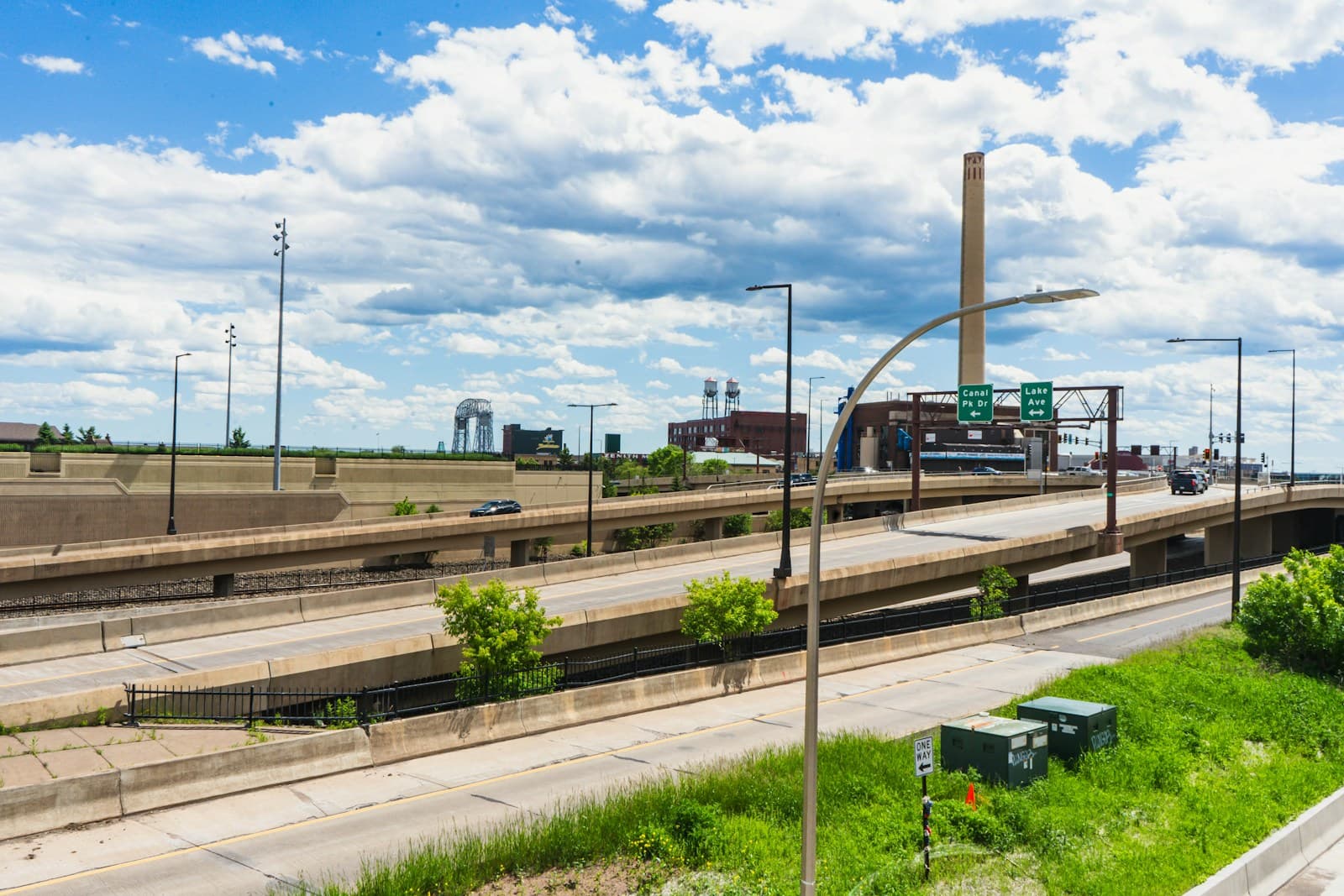
What Affects Rates in Duluth
- Lake Superior Effect Snow and Steep Grades: Duluth receives 80–135 inches of snow annually due to lake-effect patterns, and the city's steep hillside terrain creates frequent winter collision claims. High-risk drivers with previous at-fault accidents see steeper surcharges here than in flatter, drier Minnesota cities because insurers weight weather-related accident history more heavily in high-snowfall zones.
- Regional Carrier Concentration: Duluth's market is dominated by regional and farm bureau insurers that typically offer lower high-risk rates than national carriers, but not all write SR-22 policies. Drivers with violations often find better rates by comparing a regional mutual insurer against a non-standard specialist rather than sticking with a national brand that assigned them to a high-risk tier.
- Rural Commute Patterns and Mileage: Many Duluth-area high-risk drivers commute from surrounding St. Louis County townships, logging 15,000–20,000 annual miles on rural highways where animal strikes and winter weather incidents are common. Insurers apply mileage-based surcharges that stack on top of violation-based rate increases, pushing premiums 15–25% higher than urban-only drivers with identical records.
- No-Fault PIP Requirements: Minnesota's no-fault system requires $40,000 in personal injury protection (PIP) coverage, adding $30–$60/mo to every policy regardless of driving record. High-risk drivers in Duluth cannot waive PIP to lower premiums, so post-DUI total costs include both liability surcharges and mandatory PIP—making comparison shopping critical to avoid paying inflated rates on both components.

Find out exactly how long SR-22 is required in your state
Coverage Recommendations
Cost estimates are based on available industry data and vary by driver profile. These are not insurance quotes.
Liability Insurance
Minnesota requires 30/60/10 minimums, but high-risk drivers in Duluth should consider 100/300/100 limits given the city's winter collision frequency and medical cost trends. Raising limits from state minimums to 100/300/100 typically adds $25–$45/mo, a smaller percentage increase for high-risk drivers than for clean-record drivers because the base rate is already elevated.
$95–$180/mo for 30/60/10; $120–$225/mo for 100/300/100Estimated range only. Not a quote.
Uninsured Motorist Coverage
Uninsured motorist (UM) coverage is not mandatory in Minnesota but is strongly recommended in Duluth, where rural St. Louis County has higher uninsured driver rates than the Twin Cities metro. High-risk drivers pay $15–$30/mo for UM/UIM matching their liability limits, protecting against hit-and-run incidents common in winter parking scenarios and rural highway crashes.
$15–$30/mo for 100/300 UM/UIMEstimated range only. Not a quote.
Comprehensive Coverage
Comprehensive coverage in Duluth addresses frequent deer strikes on Highway 61 and I-35 corridors, plus ice-dam roof damage to parked vehicles in winter. High-risk drivers financing a vehicle must carry comp and collision; those who own outright should compare the $600–$1,200 annual cost against their vehicle's actual cash value, especially if the car is older than 8 years.
$50–$100/mo with $500 deductibleEstimated range only. Not a quote.
Full Coverage
Full coverage (liability + comp + collision + PIP + UM) for high-risk drivers in Duluth typically runs $240–$420/mo depending on violation type and vehicle value. Drivers exiting the SR-22 period should re-quote full coverage every 6 months, as many carriers reduce surcharges by 10–15% at the 12-month and 24-month post-filing milestones even if the violation remains on the MVR for five years.
$240–$420/mo for high-risk driversEstimated range only. Not a quote.