
What Affects Rates in Concord
- Capital City Traffic Concentration: Concord's downtown corridor and I-93/I-89 interchange create elevated accident frequency compared to surrounding Merrimack County areas. Post-SR22 drivers face 8–12% higher liability premiums in urban Concord zip codes (03301, 03303) than in Pembroke or Bow due to claim density—carriers price collision and comprehensive coverage based on where you garage your vehicle overnight.
- New Hampshire Uninsured Driver Rate: New Hampshire does not mandate auto insurance for all drivers, resulting in higher uninsured motorist exposure statewide. Post-SR22 drivers in Concord should prioritize uninsured/underinsured motorist coverage at 100/300 limits minimum—this coverage costs $8–$18/mo more but protects you if hit by an uninsured driver, and a second at-fault accident or lapse will trigger far steeper rate increases.
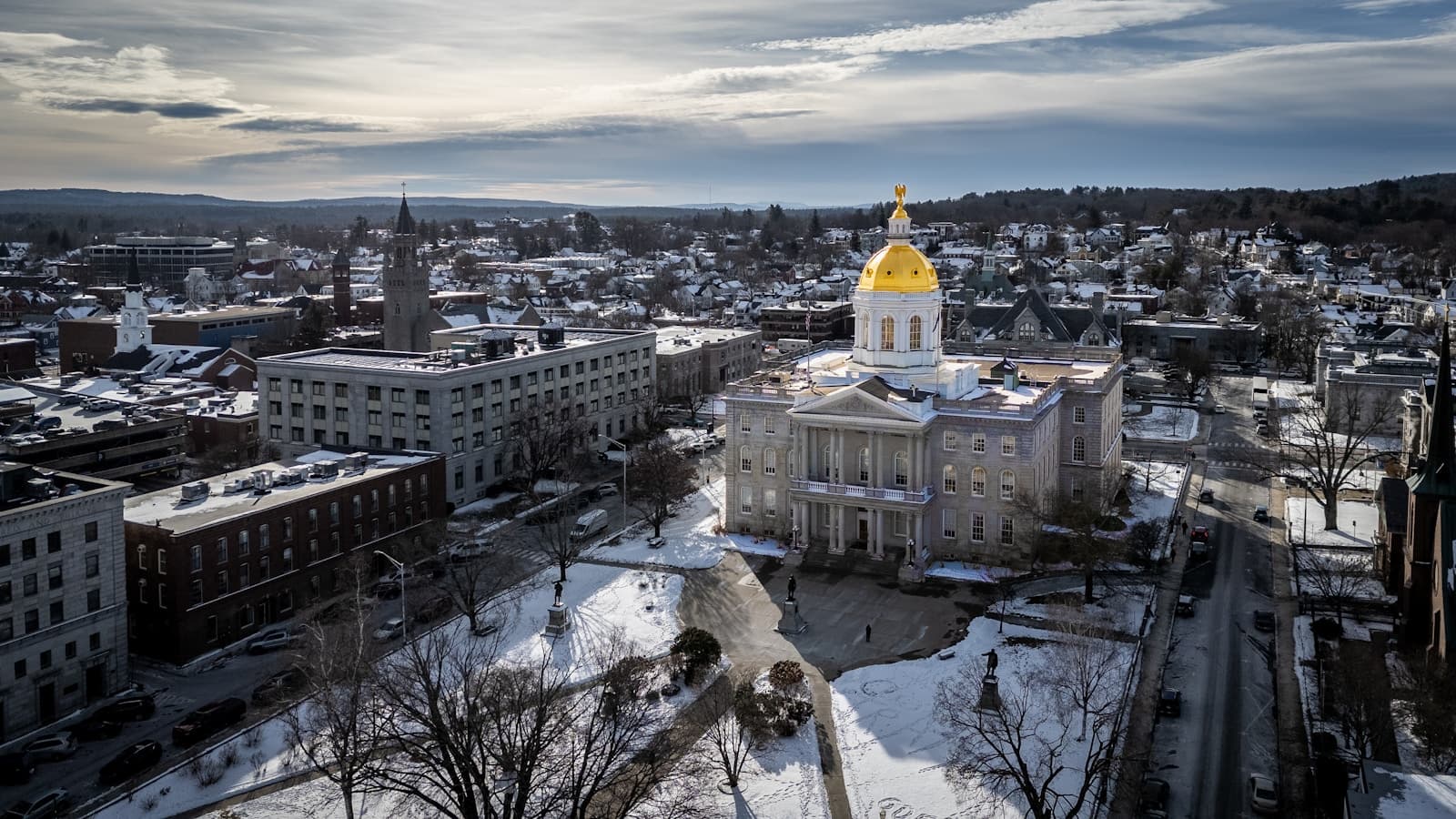
- Winter Weather Claim Frequency: Concord averages 64 inches of snow annually, with December–February ice storms increasing single-vehicle and multi-car collision claims. Carriers charge post-SR22 drivers 10–18% more for comprehensive and collision coverage during winter months in central New Hampshire—maintaining continuous coverage through winter without a claim helps demonstrate lower risk and accelerates rate reduction.
- Post-SR22 Carrier Availability: Standard carriers like Geico and Progressive typically re-accept post-SR22 drivers 12–18 months after filing ends if no new violations occur, while regional carriers writing high-risk business in Concord (including non-standard specialists) may offer lower rates immediately after SR-22 completion. Shopping across both carrier types every 6 months during your rate recovery period can yield $400–$900 annual savings compared to staying with the insurer that filed your SR-22.
- NH DMV Reinstatement Process: New Hampshire requires SR-22 filing through the NH DMV for DUI, reckless driving, driving after suspension, or repeated violations. Once your 3-year SR-22 period ends, your carrier stops filing but the violation remains on your MVR for 3–5 years depending on severity—DUIs stay visible for 10 years. Post-SR22 drivers see the steepest rate drops in months 12–24 after filing ends as carriers weigh both SR-22 completion and time since the underlying violation.
Find out exactly how long SR-22 is required in your state
Coverage Recommendations
Cost estimates are based on available industry data and vary by driver profile. These are not insurance quotes.
Liability Insurance
New Hampshire's state minimums are 25/50/25, but post-SR22 drivers in Concord should carry 100/300/100 to protect assets if you cause another accident—a second at-fault claim will push you back into high-risk classification. Liability premiums for post-SR22 drivers in Concord run $85–$160/mo for 100/300/100 limits, with rates dropping 12–20% in year two after SR-22 ends if your record stays clean.
$85–$160/mo for 100/300/100 limitsEstimated range only. Not a quote.
Uninsured Motorist Coverage
New Hampshire does not require all drivers to carry insurance, increasing your risk of being hit by an uninsured driver in Concord's downtown or on Route 3/I-93 corridors. Uninsured/underinsured motorist coverage at 100/300 limits costs post-SR22 drivers $10–$22/mo more but covers your injuries and vehicle damage if struck by a driver with no coverage—critical protection given that a second at-fault accident will spike your rates 40–70%.
$10–$22/mo for 100/300 UM/UIMEstimated range only. Not a quote.
Full Coverage
Full coverage (liability + collision + comprehensive) for post-SR22 drivers in Concord typically costs $140–$280/mo depending on vehicle value, deductible, and time since SR-22 filing ended. Carriers price collision and comprehensive based on Concord's winter claim frequency and urban theft rates—choosing a $1,000 deductible instead of $500 can reduce premiums by $15–$30/mo while you rebuild your driving record.
$140–$280/mo including collision/compEstimated range only. Not a quote.
Comprehensive Coverage
Comprehensive covers non-collision damage like winter storm damage, theft, and animal strikes common in central New Hampshire. Post-SR22 drivers in Concord pay $25–$55/mo for comprehensive depending on vehicle value and deductible—this coverage is often required if you have a car loan, and maintaining it without a claim through winter helps demonstrate lower risk to carriers during your rate recovery period.
$25–$55/mo depending on vehicle valueEstimated range only. Not a quote.