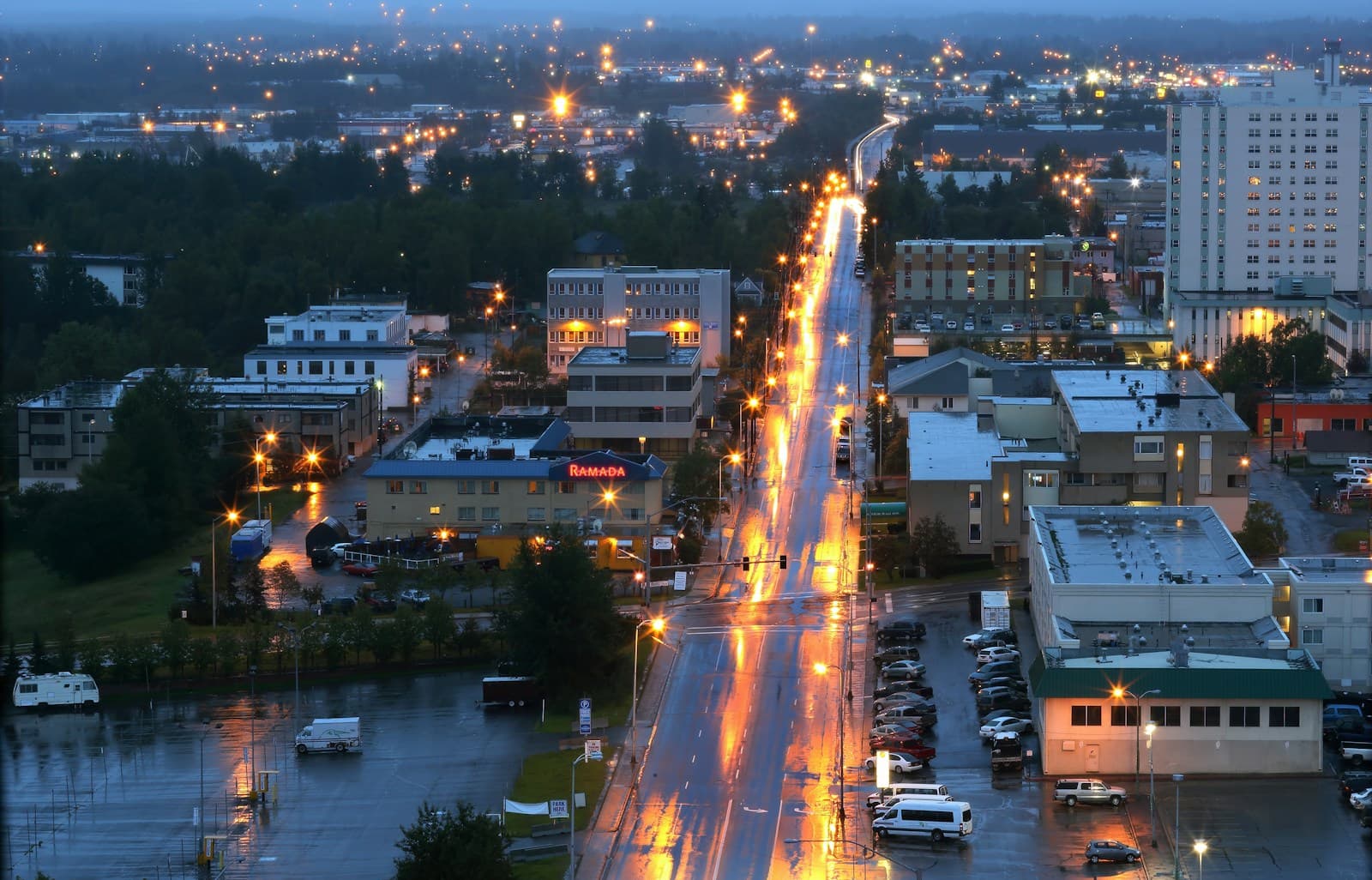
What Affects Rates in Anchorage
- Winter Weather Accident Rates: Anchorage sees elevated accident frequency from October through April due to ice, snow, and limited daylight. High-risk drivers with prior at-fault accidents face steeper surcharges here than in temperate markets, as carriers price in the heightened winter collision risk.
- Limited Carrier Competition: Fewer national insurers operate in Alaska compared to the Lower 48, reducing competition for high-risk policies. Drivers often find only 3–5 carriers willing to write SR-22 coverage in Anchorage, which keeps premiums elevated compared to markets with 10+ competing providers.
- High Uninsured Motorist Rate: Alaska's uninsured driver rate hovers around 14%, well above the national average of 12.6%. High-risk drivers in Anchorage see this reflected in higher uninsured motorist coverage premiums, as carriers price for the increased likelihood of accident claims involving uninsured parties.
- Glenn Highway and Seward Highway Corridors: These high-traffic arteries see frequent accidents, especially during winter commutes and tourist season. Drivers with violations living near or commuting on these routes may face ZIP code-based surcharges due to elevated claim frequency in these corridors.
- Court Processing and DMV Coordination: The Alaska Division of Motor Vehicles processes SR-22 filings through a centralized system in Juneau, but Anchorage drivers handle most violations through the Anchorage District Court. Delays in court-to-DMV reporting can extend the timeline for reinstatement, which some carriers factor into risk assessment for recent violators.
Find out exactly how long SR-22 is required in your state
Coverage Recommendations
Cost estimates are based on available industry data and vary by driver profile. These are not insurance quotes.
Liability Insurance
Alaska requires 50/100/25 minimums, but high-risk drivers in Anchorage should consider 100/300/100 given the state's tort system and high uninsured rate. If an uninsured driver hits you on icy Glenn Highway, your own coverage becomes critical for recovering costs beyond their ability to pay.
$140–$280/mo for state minimums with SR-22Estimated range only. Not a quote.
Uninsured Motorist Coverage
With 14% of Alaska drivers uninsured, this coverage protects you when hit by someone without insurance or with insufficient limits. High-risk drivers in Anchorage pay $30–$65/mo for 100/300 UM coverage, but it's often the difference between full recovery and out-of-pocket losses after a winter highway accident.
$30–$65/mo for 100/300 limitsEstimated range only. Not a quote.
Comprehensive Coverage
Anchorage's wildlife encounters—moose strikes are common on city periphery roads and during winter months—make comprehensive critical for financed vehicles. High-risk drivers pay 25–40% more than standard-risk drivers, but a single moose collision can total a $30,000 vehicle, making the $80–$150/mo premium worthwhile.
$80–$150/mo with $500 deductibleEstimated range only. Not a quote.
Full Coverage
Combining liability, collision, and comprehensive, full coverage for high-risk drivers in Anchorage runs $250–$450/mo depending on violation type and vehicle value. Lenders require it for financed cars, and given Anchorage's winter conditions and animal collision risk, it's often the practical choice even for paid-off vehicles worth over $8,000.
$250–$450/mo for typical sedanEstimated range only. Not a quote.